ClimateGate news

Showing posts with label Polar Bears. Show all posts

Saturday, September 6, 2008

McCain to make Palin energy czar

The Sunday Telegraph is reporting that John McCain wants to put Sarah Palin in charge of US oil and energy policy if he becomes president:

The Republican presidential candidate will make his running mate the public face of the country's drive for energy independence, according to a McCain campaign official.

The campaign official said: "The Democrats say that Governor Palin is inexperienced, but she has vast experience in the energy sector. She will be at the forefront of the push for energy independence. She's popular and she's very persuasive." A Republican Party official, who has discussed Mrs Palin's role with members of Mr McCain's team, added: "She can say: 'I'm from Alaska. I know all about this and I support drilling, even in ANWR."

"No one has more experience of getting oil out of the ground and to the market than Sarah Palin," he said. "It is the issue that most distinctively divides the two parties and it is one that has proved popular for Senator McCain.

"No political figure in the US has more experience of taking on privilege and vested interests than Sarah Palin."

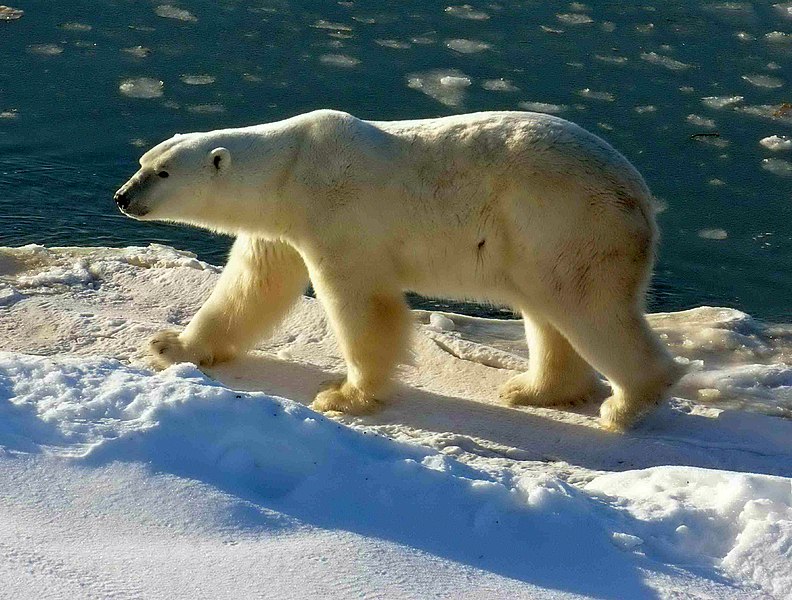
On another note, Governor Palin opposed the listing of the polar bear as an endangered species and recently went so far as to sue the Department of the Interior over the issue.
August 4, 2008, Fairbanks, Alaska – Governor Sarah Palin announced today the State of Alaska has filed a lawsuit in U.S. District Court for the District of Columbia seeking to overturn U.S. Interior Secretary Dirk Kempthorne’s decision to list the polar bear as threatened under the Endangered Species Act.

This action follows written notice given more than 60 days ago to Secretary Dirk Kempthorne of the Department of the Interior and Director Dale Hall of the U.S. Fish and Wildlife Service asking that the regulation listing the polar bear as threatened be withdrawn.

“We believe that the Service’s decision to list the polar bear was not based on the best scientific and commercial data available,” Governor Palin said.

The Service’s analysis failed to adequately consider the polar bears’ survival through prior warming periods, and its findings that the polar bear is threatened by sea-ice habitat loss and inadequate regulatory mechanisms to address sea-ice recession are not warranted. The Service also failed to adequately consider the existing regulatory mechanisms, including conservation measures within Alaska and the international community, which have resulted in a sustainable worldwide polar bear population that has more than doubled in number over the last 40 years to 20,000-25,000 bears.
Bravo for Governor Palin. Who better than Alaskans to know the real story of the polar bear? Polar bears are not threatened and the greens managed to browbeat Kempthorne into listing them as such when it was completely unwarranted.

It was just another move by the greens to make it more difficult to drill for oil in the Arctic. Let's hope Governor Palin's suit is successful and this obstacle to energy independence can be removed.

Related.

Update & Note: the term "Czar" or "Tsar" does not appear in the above article from the Sunday Telegraph. It was a term I used in the title of this post. Actually, the more appropriate use of the word in this case would be the feminine "Czaritsa" or "Tsaritsa".

At any rate, in the strictest sense it refers to a ruler or monarch, which is not a position you will find in the government of the USA. Its use here is in the more informal meaning of an:
...official having special powers to regulate or supervise an activity: a racetrack czar; an energy czar.

Sunday, August 31, 2008

Gov. Palin on Polar Bears, etc.

John McCain's VP nominee discusses energy independence, drilling in ANWR and polar bears with CNN's Glenn Beck during this interview originally aired in June of this year.


via Newsbusters

Update: I just watched a fascinating interview with Gov. Palin by Maria Bartiromo on CNBC. Partial video here.

One thing for sure, Sarah Palin is going to shake up this election campaign. She has real answers for America's energy questions. And she has a track record of dealing with the oil industry in a practical, ethical and environmentally conscious manner - all the while protecting the interests of her shareholders, the people of Alaska.

She's not solely focused on developing non-renewables like oil and natural gas. As Governor she has recognized the need for, and funded other sources of energy, particularly renewables like wind and tide.

The more I see of Gov. Palin, the more I am convinced that John McCain made the right choice for his VP running mate. She makes a lot of sense and could really shake up Washington. If her ideas and principles can applied on a national scale she could actually get the US moving towards energy independence.

Perhaps the ticket should be Palin-McCain.

Thursday, July 17, 2008

Seven graphs

Andrew Bolt provides seven graphs that should make you ask: What? Has global warming now stopped?


Click image for the full story or download the graphs in PDF.

Wednesday, February 20, 2008

Global Warming? It's the coldest winter in decades

From England's Daily Express comes this revelation:

NEW evidence has cast doubt on claims that the world’s ice-caps are melting, it emerged last night.

(...)

A photograph of polar bears clinging on to a melting iceberg has become one of the most enduring images in the campaign against climate change.

It was used by former US Vice President Al Gore during his Inconvenient Truth lectures about mankind’s impact on the world. But scientists say the northern hemisphere has endured its coldest winter in decades.

Friday, May 4, 2007

A lot more polar bears


More evidence that the polar bear population is not endangered by global warming.


In fact it is thriving.


Toronto - Polar bears are the poster animals of global warming. The image of a polar bear floating on an ice floe is one of the most dramatic visual statements in the fight against rising temperatures in the Arctic.

But global warming is not killing the polar bears of Canada's eastern Arctic, according to one ongoing study. Scheduled for release next year, it says the number of polar bears in the Davis Strait area of Canada's eastern Arctic – one of 19 polar bear populations worldwide – has grown to 2,100, up from 850 in the mid-1980s.

"There aren't just a few more bears. There are a ... lot more bears," biologist Mitchell Taylor told the Nunatsiaq News of Iqaluit in the Arctic territory of Nunavut. Earlier, in a long telephone conversation, Dr. Taylor explained his conviction that threats to polar bears from global warming are exaggerated and that their numbers are increasing. He has studied the animals for the Nunavut government for two decades.
Update: But then, you'll never convince this Australian reporter who emitted tonnes of carbon (I'm sure she purchased offsets) to jet to the Canadian arctic, only to be attacked by a one of those cuddly polar bears. To her, the bear attacked because of the effects of global warming, and had nothing to do with the fact that the bear is carnivorous predator.

Friday, April 27, 2007

The Bear Facts

Excerpt from an article at the Western Standard:

And so it is that environmental groups such as the World Wildlife Fund have begun using images of the polar bear to draw the world's attention to global warming. Their argument goes something like this: humans should cut back on their emissions of greenhouse gases, because those gases are warming the atmosphere at an alarming rate, causing temperatures in the Arctic to rise. As a result, sea ice forms less frequently, and polar bears are losing the icy platforms from which they hunt for seals. The bears, therefore, might die off because of global warming, which leads directly to the grand finale--a plea to save the polar bear by giving money to the fight against global warming.

(...)

However, all that's known for sure about the world's polar bear population is that it is in flux. It is stable in many areas, decreasing in a few and increasing in a few others, according to a new status table compiled by the Polar Bear Specialist Group of the World Conservation Union. Lily Peacock, the government of Nunavut's polar bear biologist, reveals there are large gaps in the research, and that experts can't truthfully say whether the overall population is rising or falling. "That's why, when we talk about the entire world's population, we say between 20,000 and 25,000," Peacock says. But if this figure is accurate, then polar bear numbers have actually more than doubled in the past half-century. More than half of the world's polar bears can be found in Canada, and about 90 per cent of these make their homes in Nunavut.
Read the full article here (free registration required)

Monday, April 9, 2007

Polar Bear uncertainty

In the U.S., the Fish & Wildlife Service wants to declare the Polar Bear population as threatened with extinction. Just one small problem. They're having trouble finding the definitive, clear science they need to back up that claim.

via: Cheat Seeking Missiles.

Sunday, March 11, 2007

IPCC Report will turn up the hysteria

The IPCC's 2nd report of 2007 will be issued in Belgium in April:

The draft document by the authoritative Intergovernmental Panel on Climate Change focuses on global warming's effects and is the second in a series of four being issued this year. Written and reviewed by more than 1,000 scientists from dozens of countries, it still must be edited by government officials.
And they intend to really crank up the hysteria.
The report included these likely results of global warming:

_Hundreds of millions of Africans and tens of millions of Latin Americans who now have water will be short of it in less than 20 years. By 2050, more than 1 billion people in Asia could face water shortages. By 2080, water shortages could threaten 1.1 billion to 3.2 billion people, depending on the level of greenhouse gases that cars and industry spew into the air.

_Death rates for the world's poor from global warming-related illnesses, such as malnutrition and diarrhea, will rise by 2030. Malaria and dengue fever, as well as illnesses from eating contaminated shellfish, are likely to grow.

_Europe's small glaciers will disappear with many of the continent's large glaciers shrinking dramatically by 2050. And half of Europe's plant species could be vulnerable, endangered or extinct by 2100.

_By 2080, between 200 million and 600 million people could be hungry because of global warming's effects.

_About 100 million people each year could be flooded by 2080 by rising seas.

_Smog in U.S. cities will worsen and "ozone-related deaths from climate (will) increase by approximately 4.5 percent for the mid-2050s, compared with 1990s levels," turning a small health risk into a substantial one.

_Polar bears in the wild and other animals will be pushed to extinction.
Polar Bears are thriving. Sea levels are not rising. Global temperatures are cooling. So the IPCC keeps cranking up the hysteria.

It's eco-terrorism.

Tuesday, February 20, 2007

Polar Bear population increased dramatically since 70's

Thanks to the mainstream media, we've all heard about the dire plight of polar bears because of global warming. Here's some statistics which might make you think otherwise:

Environmental activists have presented only one academic study that shows any negative effect of warming temperatures on polar bears, and only anecdotal evidence of bears drowning and eating each other, says H. Sterling Burnett, senior fellow at the National Center for Policy Analysis.

Other, more comprehensive research suggests the plight of that one population does not reflect the polar bear population trend as a whole:

  • Since the 1970s, while much of the world was warming, polar bear numbers increased dramatically, from roughly 5,000 to 25,000 bears -- a higher polar bear population than has existed at any time in the twentieth century.
  • Scientists believe polar bears thrived in the past in temperatures even warmer than at present -- during the medieval warm period 1,000 years ago and during the Holocene Climate Optimum between 5,000 and 9,000 years ago.
  • Dr. Mitchell Taylor, a biologist with Nunavut Territorial government in Canada says the polar bear population in Canada alone has increased 25 percent from 12,000 to 15,000 during the past decade, with 11 of Canada's 13 polar bear populations stable or increasing in number.

Groups such as the World Wildlife Fund (WWF) have written on the threats allegedly posed to polar bears populations from global warming. But their analysis isn't supported by the data, says Burnett:

  • Only two bear populations -- accounting for about 16.4 percent of the total number of bears -- are decreasing, and they are in areas where air temperatures have actually fallen, such as the Baffin Bay region.
  • By contrast, another two populations -- about 13.6 percent of the total number -- are growing, and they live in areas where air temperatures have risen, near the Bering Strait and the Chukchi Sea.
  • As for the rest, 10 populations representing about 45.4 percent of the total number of bears are stable, and the status of the remaining six populations is unknown.
The above is from the National Center for Policy Analysis which also has an interesting comment on the Stern Report.

See STERN WARNING SHOULD BE IGNORED

Sunday, February 4, 2007

Reflections

Mark Steyn has some fun with climate change dogma in his column today:

If the science is so solid, maybe they could drag it out to the Arctic for the poor polar bears to live on now that the ice is melting faster than a coed's heart at an Al Gore lecture.

The silliest argument is the anecdotal one: "You only have to look outside your window to see that climate change is happening." Outside my window in northern New England last week, it was minus 20 Fahrenheit. Very cold. Must be the old climate change kicking in, right? After all, December was very mild. Which was itself a sign of climate change.

A few years ago, the little old lady who served as my town's historian for many decades combed over the farmers' diaries from two centuries ago that various neighbors had donated to her: From the daily records of 15 Januarys, she concluded that three were what we'd now regard as classic New Hampshire winters, ideal for lumbering or winter sports; eight had January thaws, and four had no snow at all. This was in the pre-industrial 18th century.

Today, faced with eight thaws and four entirely snowless Januarys, we'd all be running around shrieking that the great Gaia is displeased. Wake up and smell the CO2, people! We need to toss another virgin into the volcano. A virgin SUV, that is. Brand-new model, straight off the assembly line, cupholders never been used. And as the upholstery howls in agony, we natives will stand around chanting along with High Priestess Natalie Cole's classic recording: ''Unsustainable, that's what you are.''
Mark's full article is here.

Then there's this: A complete list of things caused by global warming

and finally, believe it or not, this fellow actually read the IPCC Summary for Policymakers (released Friday to a frenzied, catastrophe-hungry media) and concludes that the IPCC Report Doesn't Prove Causality.

Thursday, January 25, 2007

Polar Bears on Thin Ice, Not Really!

Published In: Pittsburgh Tribune-Review

Satirist Stephen Colbert coined a term truthiness, which the online encyclopedia Wikipedia explains is "to claim to ‘know' something . . . ‘from the gut' without regard to evidence, logic . . . or actual facts." Truthiness is an emotional appeal meant to short-circuit intellectual examination of the claims being made.

A prime example of the effectiveness of truthiness came in late December when environmental lobbyists persuaded the Bush administration to recommend that the polar bear be listed as threatened due to global warming. In lieu of evidence, environmentalists offered mostly anecdotes that polar bears are at risk: isolated reports of a few polar bears drowning in Arctic waters normally containing sea ice as well as a few instances of cannibalism among polar bears. Then they posited first that human caused global warming will melt most of the ice at the North Pole within 50 years, and that without the ice, polar bears will be unable to hunt seals, their preferred prey.

Environmentalists presented only one study which shows that one population of polar bears in Canada's Western Hudson Bay had seen a decline of 21 percent following a loss of the average weight of female polar bears which led to reduced cub survival.

Fortunately, both for policy and the polar bears, the plight of this one population does not reflect the population trend as a whole. Indeed, since the 1970s -- all while the world was warming - polar bear numbers increased dramatically from around 5,000 to as many as 25,000 today (higher than at anytime in the 20th century). And historically, polar bears have thrived in temperatures even warmer than at present -- during the medieval warm period 1000 years ago and during the Holocene Climate Optimum between 5,000 and 9,000 years ago.

Polar bears have thrived during warmer climates because they are omnivores just like their cousin's the Brown and Black bears. Though Polar Bears eat seals more than any other food source at present, research shows that they have a varied diet when other foods are available including, fish, kelp, caribou, ducks, sea birds, the occasional beluga whale and musk ox and scavenged whale and walrus carcasses. In addition, Dr. Mitchell Taylor, a biologist with Nunavut Territorial government in Canada, pointed out in testimony to the U.S. Fish and Wildlife Service, that modest warming may be beneficial to bears since it creates better habitat for seals and would dramatically increase blueberry production which bears gorge themselves on when available.

Alaska's polar bear population is stable, and Taylor's research shows that the Canadian polar bear population has increased 25 percent from 12,000 to 15,000 during the past decade with 11 of Canada's 13 polar bear populations stable or increasing in number. Where polar bear weight and numbers are declining, Taylor thinks too many bears competing for food, rather than arctic warming, is the cause. That's right, the problem confronting polar bears may overpopulation not extinction!

The World Wildlife Fund (WWF) while arguing that polar bears are at risk from global warming presented data which actually undermine their fear.

According to the WWF there are approximately 22,000 polar bears in about 20 distinct populations worldwide. Only two bear populations - accounting for about 16.4 percent of the total number of bears - are decreasing, and they are in areas where air temperatures have actually fallen, such as the Baffin Bay region. By contrast, another two populations - about 13.6 percent of the total number - are growing, and they live in areas were air temperatures have risen, near the Bering Strait and the Chukchi Sea. As for the rest, ten populations - comprising about 45.4 percent of the total number of bears - are stable, and the status of the remaining six populations is unknown.

For now the government will be taking public comments on the proposal - let's hope some science: facts, accuracy and truthfulness make an appearance before this goes too far. The polar bear is not threatened or endangered and should not be listed as such as a backdoor way to restrict energy use in the United States.

Source